In 1977, I, Raphael De Luca, was born in Sydney, Australia, to Domenico and Margerita, Italian immigrants chasing the Australian dream. My parents left Italy in the 1950s, their hearts full of hope but their hands empty. My father, Domenico, carried with him stories of his semi-professional football days. “The game is life,” he’d say, his thick Italian accent lacing every word with gravitas. My mother, Margerita, was the glue that held our family together. Her love came in sacrifices—long shifts in factories and a life of quiet resilience.From the moment I could walk at six months old, football was my destiny. At age four, my parents signed me up for the local junior team. By age six, I was dribbling past kids twice my size. My father, ever the romantic about the sport, called me Il Falco—The Falcon—because of my speed and precision. He told anyone who’d listen, “This boy will one day go further than I ever could.”
By the time I was a teenager, football was no longer a game; it was an obsession. Weekends were spent under the harsh Australian sun, playing for my local club. Scouts started showing up, whispering about the boy who could make the impossible look easy.At 16, I was offered a chance to join Sydney FC’s youth academy—a dream for any young footballer growing up in the city. My father was ecstatic, driving me to every training session in his old Fiat, beaming with pride. “You’re making your mark,” he’d say, his voice thick with emotion.But Sydney FC’s academy wasn’t just about talent—it was about discipline, focus, and navigating the pressures of being in the spotlight. I thrived on the field but struggled off it. My temper flared, and my discipline wavered. Coaches warned me, but I didn’t listen.By the time I turned 18, the whispers about my potential were being drowned out by murmurs about my attitude. I was dropped from the academy, my dream slipping away like sand through my fingers.
Raphael found himself knee-deep in oil and regret, his dreams of football stardom buried beneath the weight of resentment. The once vibrant rhythm of the game had been replaced by the monotonous clatter of the shop, a constant reminder of how far he had fallen. "I'm done with football," he muttered, his voice carrying the bitterness of lost opportunities.
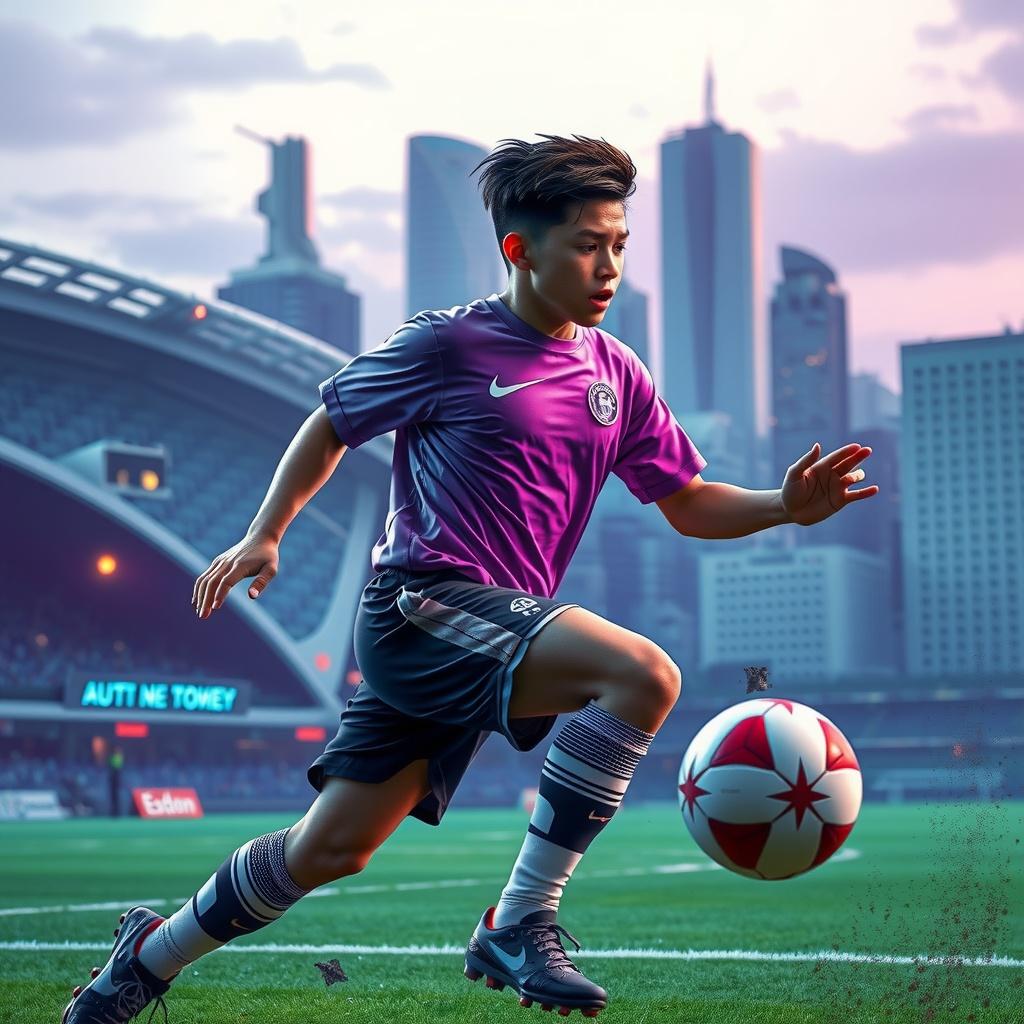
Curiosity and pride led Raphael back to the pitch, where he found a spark reigniting within. The ball danced at his feet, and the rhythm of the game felt like coming home. Father Matteo’s words echoed in his mind, a beacon of hope in the darkness. "Play for yourself," he had said, and Raphael finally understood. The game hadn’t left him; he had simply been running from it.
Raphael stood on the sidelines, heart racing as the coach called his name. This was his moment, the chance to prove himself once more. The ball came to him, and instinct took over. The roar of the crowd was deafening as he scored, a triumphant return to the game he loved. In the stands, his father watched, the pride in his eyes speaking volumes. "You've made your mark," he whispered, the words carrying the weight of a thousand dreams.