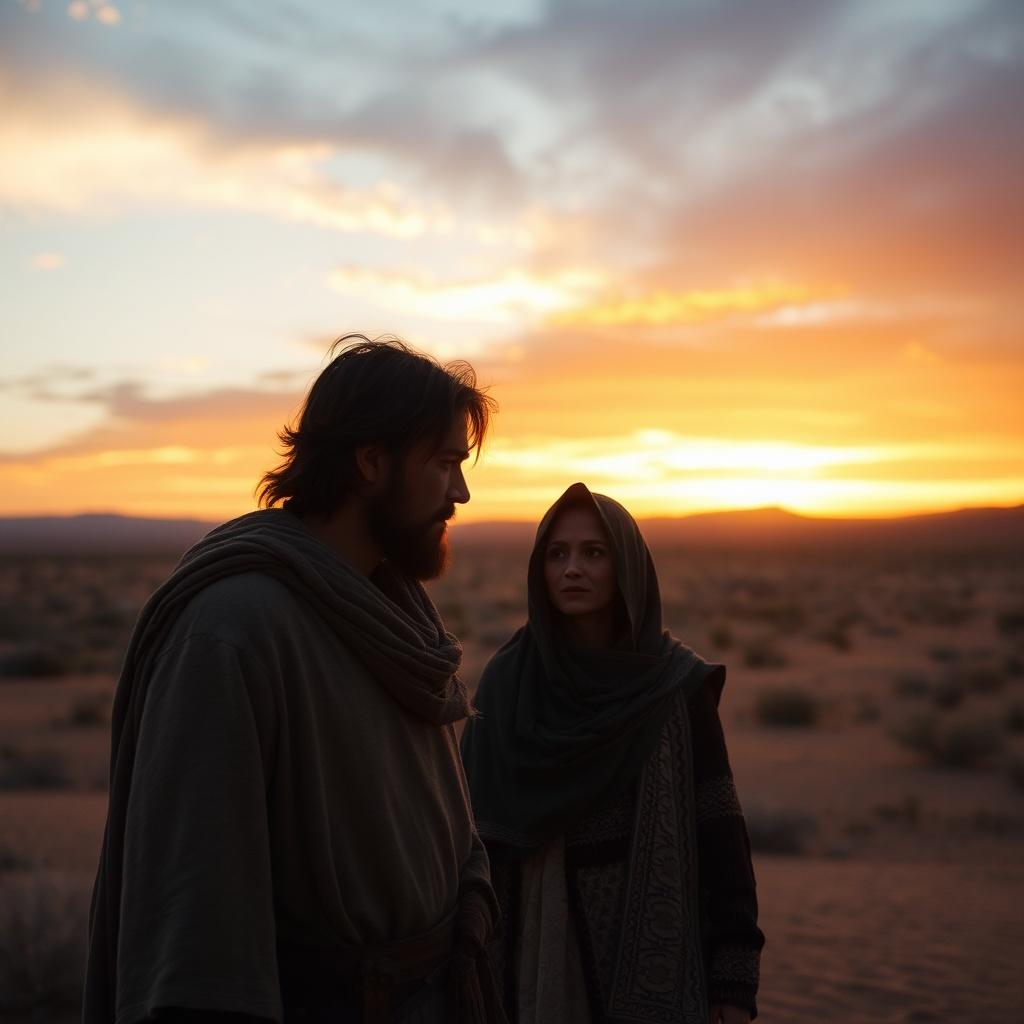
Elijah trudged into the city, his cloak billowing with the hot desert winds. His eyes scanned the desolate scene, searching for the widow God had promised. Finally, he spotted her—a frail figure bent over, gathering sticks near the city gate.
"Please, bring me a little water in a jar that I may drink," Elijah called out, his voice carrying a calm authority.
The widow paused, her eyes meeting his with a mixture of fear and fatigue. "As surely as the Lord your God lives," she replied, "I don't have any bread—only a handful of flour in a jar and a little olive oil in a jug."
"Do not be afraid," Elijah reassured her, stepping closer with gentle resolve. "Go home and do as you have said. But first, make a small loaf of bread for me from what you have and bring it to me, then make something for yourself and your son." His words seemed to carry the promise of something greater—an unyielding hope in the face of despair.
The widow obeyed, her actions driven by a faith she barely understood. "I trust your words," she murmured, almost to herself, as she worked the dough into a small loaf and placed it over the fire.
Elijah watched as the widow returned with the loaf. "The jar of flour will not be used up, and the jug of oil will not run dry," he assured her, his voice unwavering and full of conviction.
The widow found her flour jar seemingly refilled, the oil jug replenished each day. "Truly, the Lord has provided," she marveled, her heart swelling with gratitude and newfound strength. Together, Elijah and the widow weathered the famine, their faith a beacon in the arid landscape, a testament to the power of divine promise and human trust.