Meera pedaled steadily, her eyes scanning the familiar sights. As the local health worker, she was well-acquainted with the village's heartbeat. But today, her heart was heavy, burdened by the whispers of illness spreading like wildfire. She stopped by the banyan tree, where the elders often gathered. "Good morning, everyone. I hope you’re all keeping well," she greeted, though her voice carried and undertone of urgency.
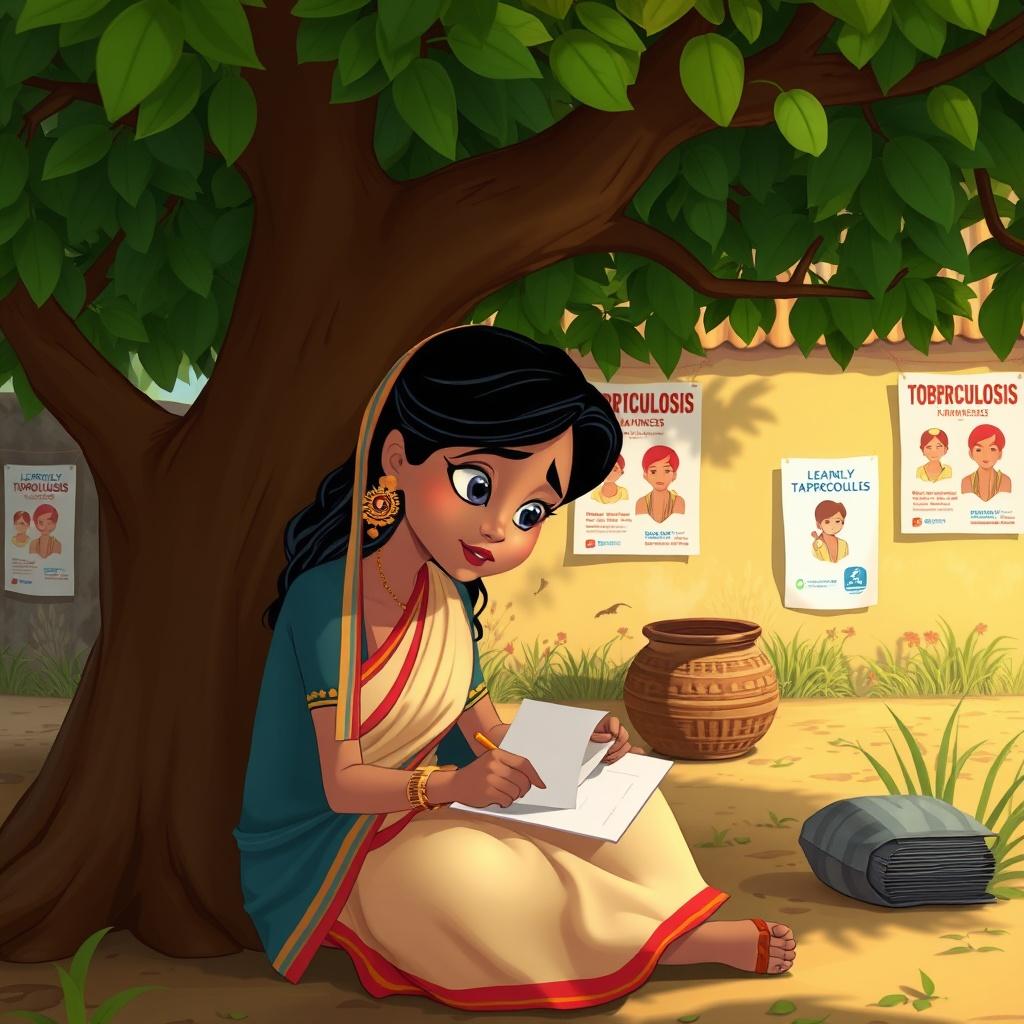
Meera sorted through a pile of medical reports, her brow furrowed with concern. The number of tuberculosis cases had spiked alarmingly. She glanced at a letter she had just penned to Arjun, her friend in the city. "Dear Arjun, the situation here is growing dire. I can see the fear in their eyes, but it’s the stigma that worries me most," she wrote.
Meera stood before them, her posture calm but her mind racing. "We must not let fear drive us apart. Tuberculosis can be prevented and treated, but we must work together," she implored. The villagers shifted uneasily, some casting distrustful glances, others nodding in silent agreement.
Meera sat on her porch, a notebook in her lap, reflecting on the day’s events. She penned another letter to Arjun. "I believe we are making progress. Slowly, they are beginning to listen. Education is our strongest weapon against this disease," she wrote, hope threading through her words.
Meera gathered with a few villagers under the banyan tree, their faces illuminated by the soft glow of a lantern. They discussed plans to spread awareness, to educate others about prevention and treatment. "Together, we can overcome this," she assured them, her voice steady and convincing.
She picked up her pen one last time for the day, addressing Arjun. "In the end, it is not just the disease we fight, but the fear that accompanies it. Here, in this small village, I find courage in the unlikeliest of places. And it is that courage that will see us through," she concluded, feeling the weight of her words settle with comforting finality.