Peter, a thoughtful assistant professor, stands before a chalkboard filled with intricate diagrams and civil engineering equations. The gentle rustle of papers and the faint aroma of coffee mingle in the air. Outside, the academy gardens are bright with dew, and the world feels peaceful, untouched by conflict.
"Remember, true innovation happens when we collaborate and challenge each other’s ideas," he encourages his students, who listen with rapt attention.
Peter works alongside his favorite students, their faces aglow with excitement as they tinker with a prototype for a revolutionary civil transportation system. The hum of conversation is lively, punctuated by laughter and the occasional clatter of tools. Notes and sketches cover every surface, evidence of the academy’s creative spirit.
Maya, a bright and curious student, glances up from her drafting notes. "Professor, do you think this invention could change our cities forever?"
"If we succeed, it might change much more than that. It could change how people live and connect," replies Peter, pride and hope flickering in his eyes.
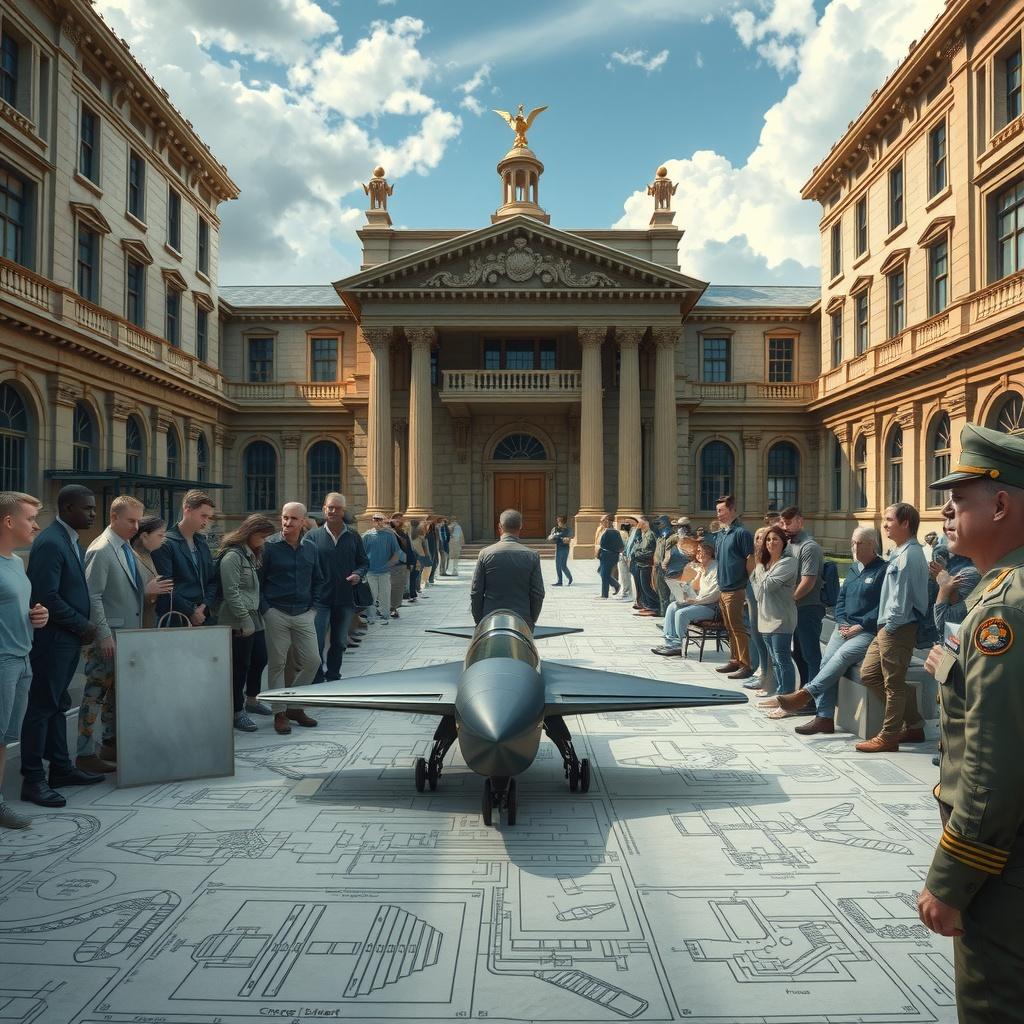
The team gathers around the working prototype, tension and excitement thick in the air. The device—a sleek, compact transportation module—hums quietly, its polished metal surfaces reflecting the light. The sense of achievement is palpable as they realize the full potential of their work.
Dr. Lin, a senior colleague known for her sharp intellect, leans in to inspect the device. "This is brilliant, Peter. The military will want to see this, you know," she warns, her tone both proud and wary.
"This is for civil use. For the people. That’s what matters," Peter insists, determination hardening his features.
The peace is shattered. Boots echo in the marble corridors and voices bark orders. Students and teachers alike are herded into the main hall, confusion and fear etched on their faces as the military seizes papers, prototypes, and computers.
Colonel Harris, stern and imposing, addresses the assembled staff. "This academy has crossed boundaries. From this moment, all ongoing projects are under military review. Civilian application is suspended,"
Peter stands defiantly among his colleagues, anger simmering beneath his calm exterior.
Rows of empty chairs and abandoned projects fill the room. Notices of termination are pinned to doors, and whispers of injustice drift through the halls. Many of the most brilliant and creative teachers have been dismissed, and the sense of loss is heavy.
Maya approaches Peter, her eyes wide with worry. "What will happen to us now? To everything we built together?"
"They can take our jobs, but they can’t take our ideas—or our resolve. We’ll find a way to keep our vision alive," he reassures her softly.
Despite the turmoil, Peter and a small group of colleagues gather beneath a spreading oak tree. Their faces are tired but determined, a circle of quiet resilience against the darkening world. In their hands, they clutch salvaged notes and sketches, the seeds of new beginnings.
"No matter what happens, we’ll continue our work," Peter vows, his voice steady. Around him, the others nod in silent agreement, united by hope and the unwavering belief in the power of creativity.