The world felt limitless for a curious mind in 1984. I was just a boy, but already the tactile thrill of a touchscreen laser pen library computer was shaping my future. Its glass surface gleamed beneath my eager fingertips, far superior to anything I could have imagined off Base. The gentle hum of technology, mingled with the high-pitched squeaks in my headset, became the soundtrack to my earliest dreams.
With a few keystrokes—50R, 50Up, 50L, 50Down—I watched as my digital patterns translated into real movement. The robots responded, tracing my designs with quick, precise lines, their pens skittering over crisp paper. The thrill of seeing code come to life was matched only by the sensory tests: headphones, blindfolds, and mysterious bags filled with spaghetti, grapes, and action figures. Each challenge felt like a step toward the stars.
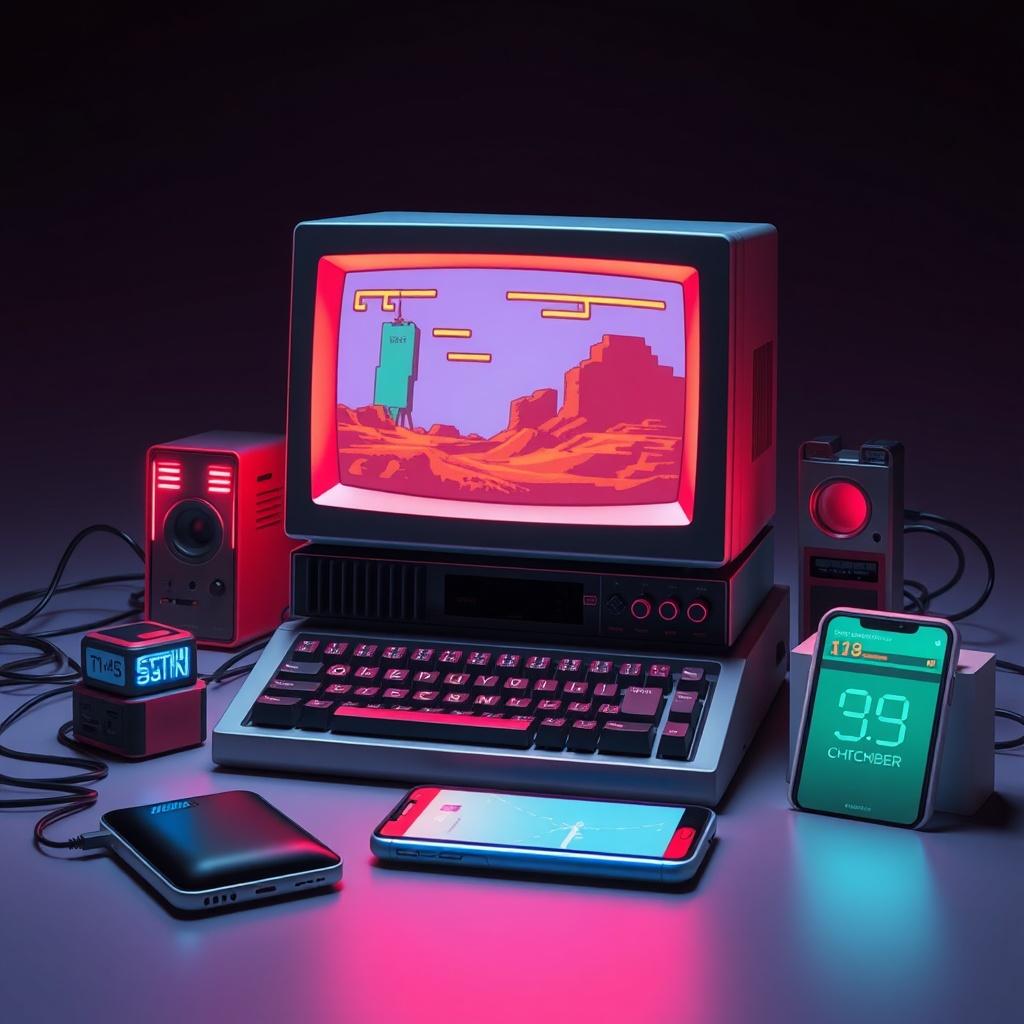
But fate soon shifted. In 1985, I left that world behind, entering a school system where computers were rare and dreams had to wait. Four years passed before I touched another machine, an Acorn, followed by a BBC computer so basic it seemed a regression. Home computers—Spectrums, Commodores, Ataris—remained distant, shimmering on the horizon, too expensive for my family, out of reach.
Undeterred, I devoured lessons in binary code and built crude on-off switches, discovering the raw backbone of computation. Yet, each breakthrough was followed by another disappearance—technology slipping away just as I grasped its edge. Years passed, marked by longing glances at store windows and secondhand consoles. When work finally brought a Sega Megadrive, a Super Nintendo, and the thrill of a Nintendo 64, gaming became my bridge back to a world of possibility.
The turn of the century saw my passion evolve. Games faded, but my hunger for technology remained. In 2007, my first iPhone arrived—a device almost as clever as that kindergarten computer. It became my gateway to creation, where stories flowed faster than ever before. I watched the world race ahead: movies filled with dazzling technology, drones soaring, and computers thinking for themselves. My old dreams resurfaced, now tinged with hope and nostalgia.
Now, as AI dawns and my 501 stories await their next chapter, I ponder what might have been if I could restart in 1984. The green pass of every sensory test, the coordination of lasers and pens, the promise of guided robots—all were the foundation for a future I glimpsed but never fully grasped. I imagine creating new computers, inventing devices that track eyes and sense touch, leading the world into new experiences. The doors of technology opened slowly for me, the best kept just out of reach. But my qualifications—on paper, sabotaged; on AI, they read "Welcome (back) Home." As Christmas approaches, I face the future with determination. Will I survive the rise of AI? My computer history is one of struggle, resilience, and the relentless pursuit of possibility.