Naked under the sun, the first people moved through the heat and thorns, their bodies vulnerable to the elements. They fashioned strips of animal hide into rough loincloths, tying them tightly to protect themselves. The textures were rough, the colors earthy, and each piece was unique, shaped by necessity rather than choice. There was a simple pride in these first inventions—clothing as survival's earliest flourish.
As generations passed, hands grew skilled at weaving and sewing, and modesty, too, became a kind of adornment. Gowns of soft cloth replaced animal hides, draping bodies in flowing, practical shapes. Patterns emerged—lines and swirls dyed with berries, symbols of belonging. Around a fire, a child tugged at her mother's sleeve, marveling at the comfort and color.
Clothing became a language, one that spoke of wealth, rank, and ambition. Noblemen adjusted their shirts, fastened their cuffs with shining buttons, and looped silken ties around their necks. The women’s gowns swept the floors, layered and embroidered, every thread a statement. Lord Alastair, resplendent in his tailored suit, offered a toast: "To fashion, the mark of our place in the world!"
War called for unity, and clothing became armor—both literal and symbolic. Troops marched in step, their uniforms a shield against chaos, their insignias a sign of shared purpose. Police and officials, too, donned uniforms, authority stitched into every thread. A young recruit glanced down at his sleeve, fingers tracing the emblem, heart pounding with pride and fear.
Humanity soared into the skies, and with flight came new needs. Jumpsuits with reinforced seams and thermal linings kept aviators safe, while explorers venturing to the poles wore clothing embedded with heating coils. In laboratories, inventors tested fabrics that repelled water, changed color, and even cleaned themselves. Dr. Simone Chen demonstrated a prototype: "Imagine a jacket that cools you in the desert, then warms you on a mountaintop—all at the touch of a button."
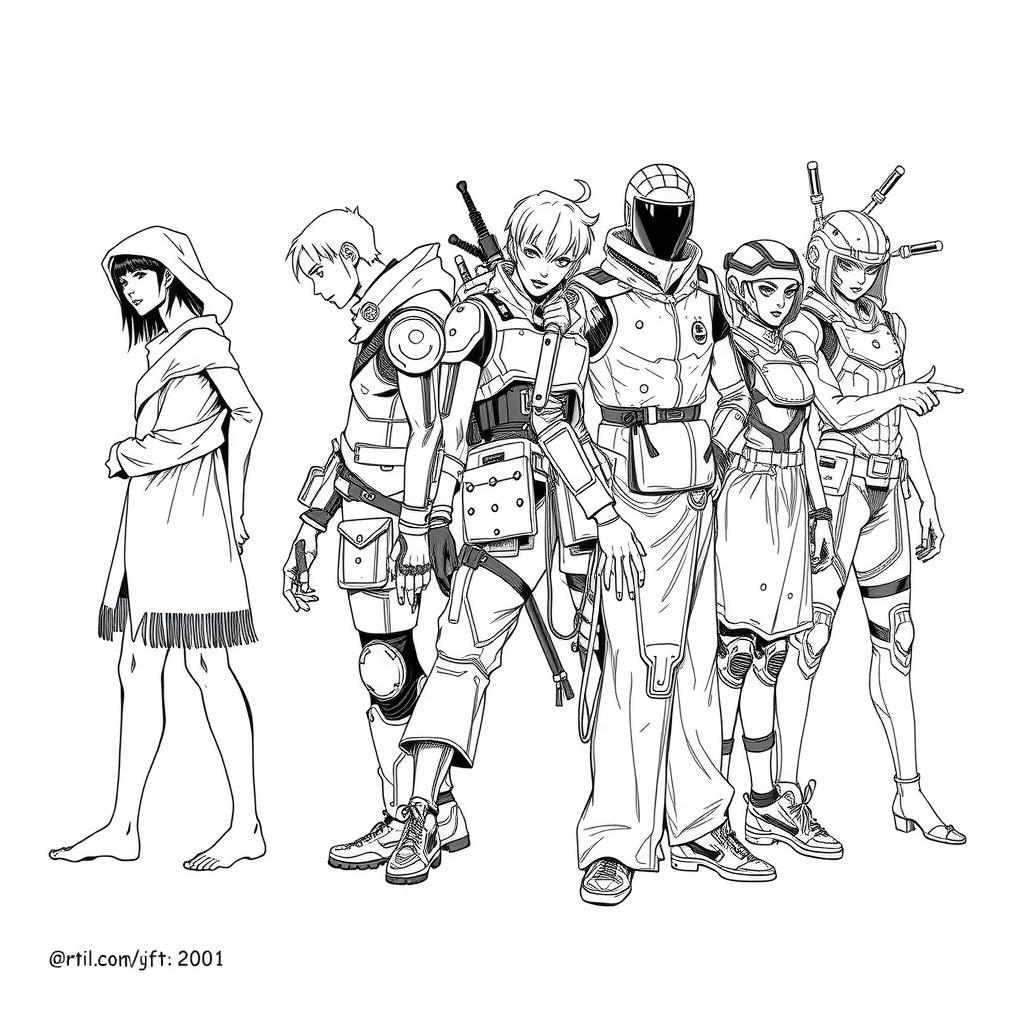
Clothing became an extension of the body, a seamless blend of fabric and technology. Suits monitored heartbeats, delivered medicine, and adapted to the weather with a flicker of color. Troops in exoskeletons lifted heavy loads with ease, while children played in garments that projected games into the air. In this new era, individuality shone brighter than ever, even as technology drew humanity closer together.
The Elder smiled, tracing the fabric at their wrist. "From the first loincloths to this… we've always dressed ourselves not just to survive, but to express who we are, and who we hope to become." The child nodded, eyes wide with wonder, as the lights in their suit twinkled in time with the stars above.